

Personal Injury Law Firm

We have. Here's how it works.
When you're hurt and dealing with the aftermath of a traumatic event, the legal process can feel like unfamiliar territory. You have questions, you're not sure what comes next, and it's hard to know where to turn. That's exactly where a personal injury lawyer should step in — not just as an experienced and skilled injury lawyer, but as a guide who knows the path and can walk it with you.
At High Desert Law, we think of ourselves as your Trail Guide. The journey has a clear sequence of phases, and understanding them makes every decision along the way feel more certain and less stressful. Our ultimate goal is closure — the opportunity to move forward without lingering questions. Here's what that looks like.
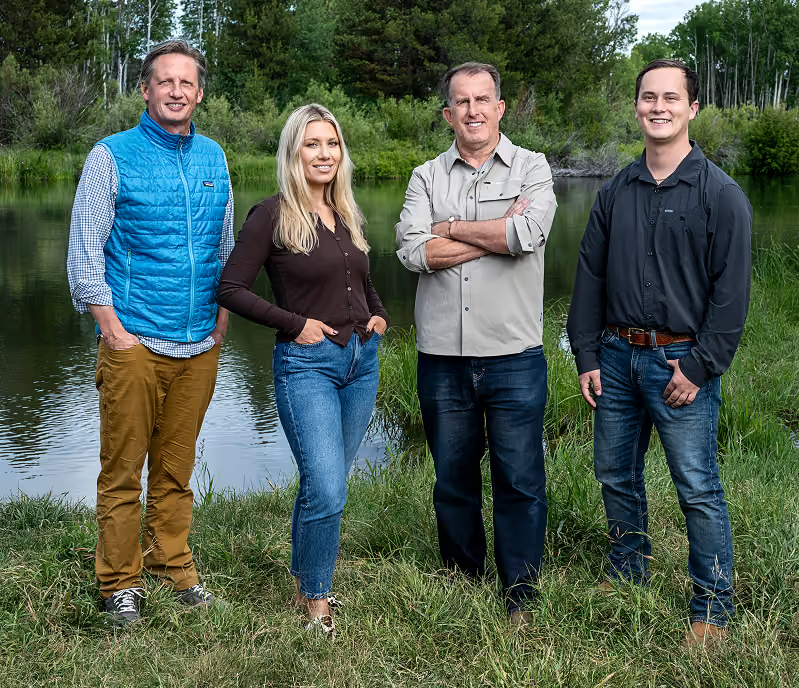

Personal Injury Attorney in Oregon
Your first call is a conversation, not a commitment. It’s a chance for you to tell us what happened and for us to give you a clear, pressure-free understanding of your options. If we believe we can help you move forward, we will explain exactly how. There are no fees unless we recover for you.
Once we begin, your healing becomes your new job.
This is for two critical reasons: first, for your personal health, as prioritizing recovery gives you the best chance to avoid long-term impacts. Second, for your case, because what your treating providers write in your medical chart is the most powerful evidence in your claim. Your job is to focus on getting the right treatment; we are your sounding board through it all.

While you focus on healing, we handle everything else. We gather all evidence — medical records, police reports, witness statements — to build the strongest possible foundation for your claim.
We manage all communications with insurance companies and guide the strategy of your case. We work with you to ensure your medical doctors are the central point of contact for your care, which is crucial for showing that all of your treatment was reasonable and necessary.

Once you've reached maximum medical improvement — the point where your recovery has stabilized and your doctors have a clear picture of your long-term condition — we conduct a thorough, objective valuation of your case. We sit down together for a thorough case valuation and strategy session. We walk you through our analysis, but you're in the driver's seat.
Together, we set a demand, which is the formal amount we present to the insurance company on your behalf. It's built to reflect the full weight of what you've been through, leaving nothing on the table and no lingering "what ifs." That's what real closure looks like.
If the insurance company doesn't offer a fair settlement, the next step is to file a lawsuit. That's a normal, expected part of the process, and we handle all of the filing on your behalf.
Filing a lawsuit doesn't mean you're walking into a courtroom tomorrow. It simply means we're turning up the pressure and sending a clear message that we're prepared to go the distance.
One key step in this phase is the deposition; a formal, recorded interview where the opposing attorney asks you questions under oath. That can sound intimidating, and it's okay if it does.
Our preparation is specifically designed to walk you through what to expect, settle your nerves, and make sure you feel genuinely ready. We'll be right by your side throughout to make sure your story is told truthfully and with confidence.

Even after a lawsuit is filed, the vast majority of cases are resolved through a negotiated settlement. This phase often involves mediation, a confidential process where a neutral third party helps both sides find common ground.
With our thorough preparation and strategic advocacy, we work to secure a settlement that honors the full scope of what you have lost, allowing you to find closure without the stress and uncertainty of a trial.
If an insurance company refuses to offer a fair settlement, a trial may be necessary. This is the final step in holding the responsible party accountable. While very few cases go this far, we prepare every case for that possibility from day one. This ensures we are always ready to fight for the just outcome you deserve.
If a trial is the right path for you, we ensure you are fully prepared and supported, giving you the strongest possible voice in the courtroom.
Contact us today for a free consultation.
Types of Personal Injury Cases
If you want to understand how Oregon law applies to your specific personal injury situation, we have pages specific to each of the Legal Services we provide.
Or, learn more about Why Us for your case.
If you have general questions about the process, our FAQ page has answers to the most common ones.